
Did you know that measuring your heart rate during running can improve your workouts? In this article, we explain how to make the most of heart rate based running, from understanding heart rate zones to finding your ideal jogging heart rate. It’s time to grab a sports watch and get started!
Table of Contents
Running Heart Rate Zones
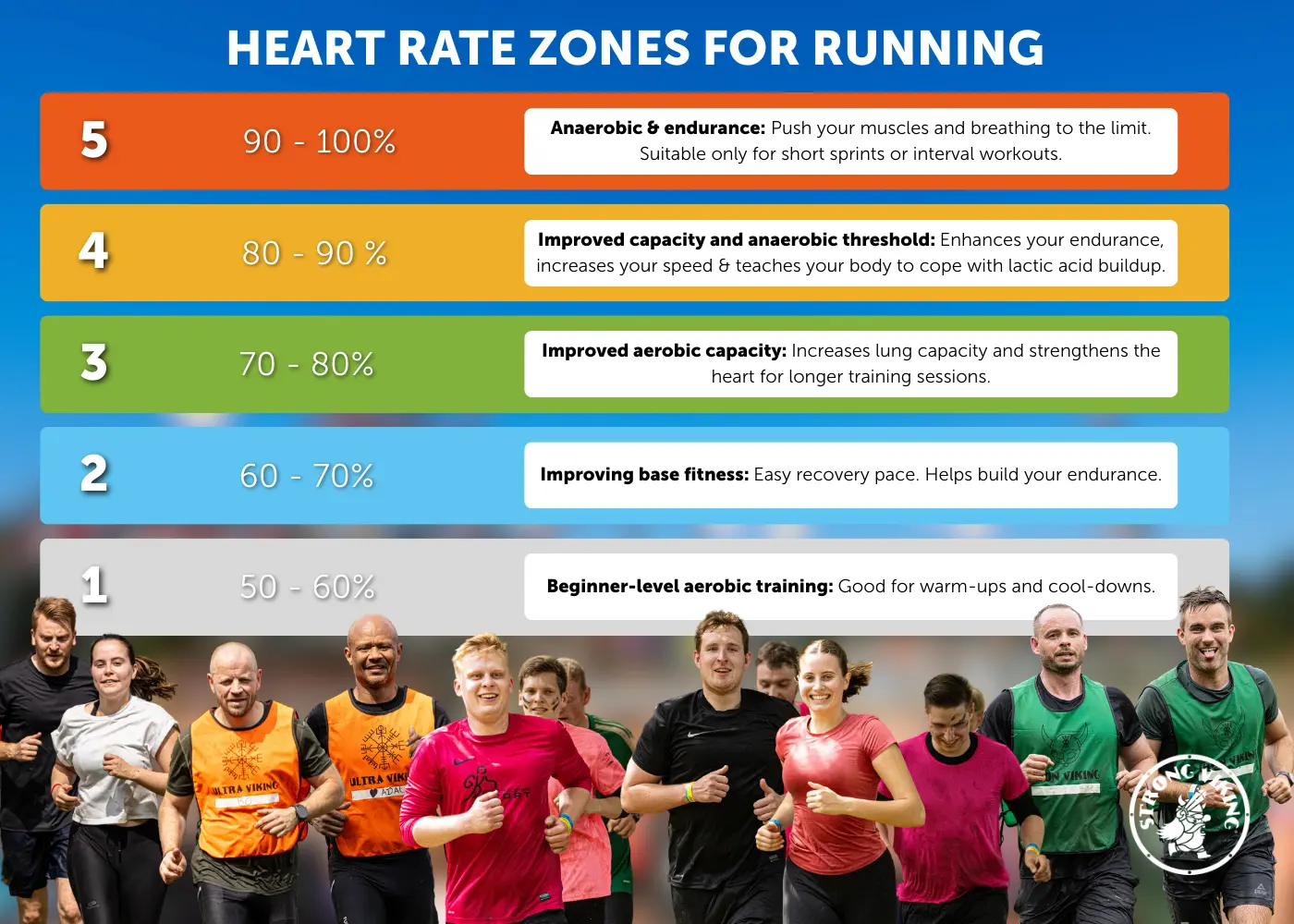
Your heart rate changes while running, depending on how hard you go. By paying attention to specific heart rate zones, you can train more efficiently and reduce the risk of injury. The zones are usually divided as follows:
Zone 1 – Recovery: 50–60% of your maximum heart rate.
Zone 2 – Endurance: 60–70% of your maximum heart rate. Perfect for building your endurance.
Zone 3 – Tempo: 70–80% of your maximum heart rate. Helps improve your aerobic capacity.
Zone 4 – Anaerobic Threshold: 80–90% of your maximum heart rate. For short, intensive sessions.
Zone 5 – Maximum: 90–100% of your maximum heart rate. Only for short sprints or interval training.
By monitoring your heart rate during jogging, you can see exactly which zone you’re in and adjust your training to match your goals more effectively.
Why Heart Rate Based Running Matters
Your heart rate responds immediately to effort. If you run faster, your heart rate rises. But other factors, like stress, sleep, and temperature, also play a role. That’s why monitoring your heart rate while running is so valuable: it gives an honest picture of what’s happening in your body.
The Benefits
Gives an accurate picture of your effort.
Improves endurance and efficiency.
Reduces risk of injury.
Helps control training intensity.
Connects breathing to heart rate for better pacing.
Running by Heart Rate Feels Strange at First
When you start running by heart rate, it can take some getting used to. Beginners often notice they need to run slower than they’re used to. This can feel frustrating, but it’s actually a good sign.
Your body is learning to work more efficiently. After a few weeks, you’ll notice that you can run faster at the same heart rate. That’s exactly the goal: progress without overexerting yourself.
The Ideal Heart Rate during Running
Your ideal heart rate while running depends on your age, fitness level, and training goals. A common rule of thumb is:
Example:
- Age: 30 years
- Maximum Heart Rate: 190 bpm
Your zones would be approximately:
- Zone 2: 114 – 133 bpm
- Zone 3: 133 – 152 bpm
Note: This is a guideline. For more accurate values, you can do a fitness test.
Tips for Running by Heart Rate
- Use a heart rate monitor or sports watch for accurate measurements.
- Start slowly and gradually increase your heart rate over time.
- Alternate training between low and high heart rate zones.
- Listen to your body: fatigue can raise your heart rate.
By regularly training based on your heart rate, you can improve your running pace and sustain it longer. Whether you’re just starting out or training for a marathon, heart rate training helps you become a better runner!
Your Heart Rate During Strong Viking
An Obstacle Run like Strong Viking is very different from a regular running session. Your heart rate during Strong Viking is much less stable and often higher than usual. While running between obstacles, you might be in a calm or moderate zone, but tackling obstacles can make your heart rate spike suddenly.
This happens because:
- you perform short, explosive bursts of strength
- you have little recovery time between obstacles
- adrenaline plays a big role
As a result, you quickly reach higher heart rate zones, even if your running pace is relatively easy.
What’s a Good Approach?
If you notice your breathing while running getting completely out of control, that’s a sign to ease up. Between obstacles, recover by jogging more slowly or even walking briefly.
It’s not very useful to stick rigidly to fixed heart rate zones. The goal here isn’t constant control but managing spikes and recovering when you can. That variation is exactly what makes it challenging and fun!